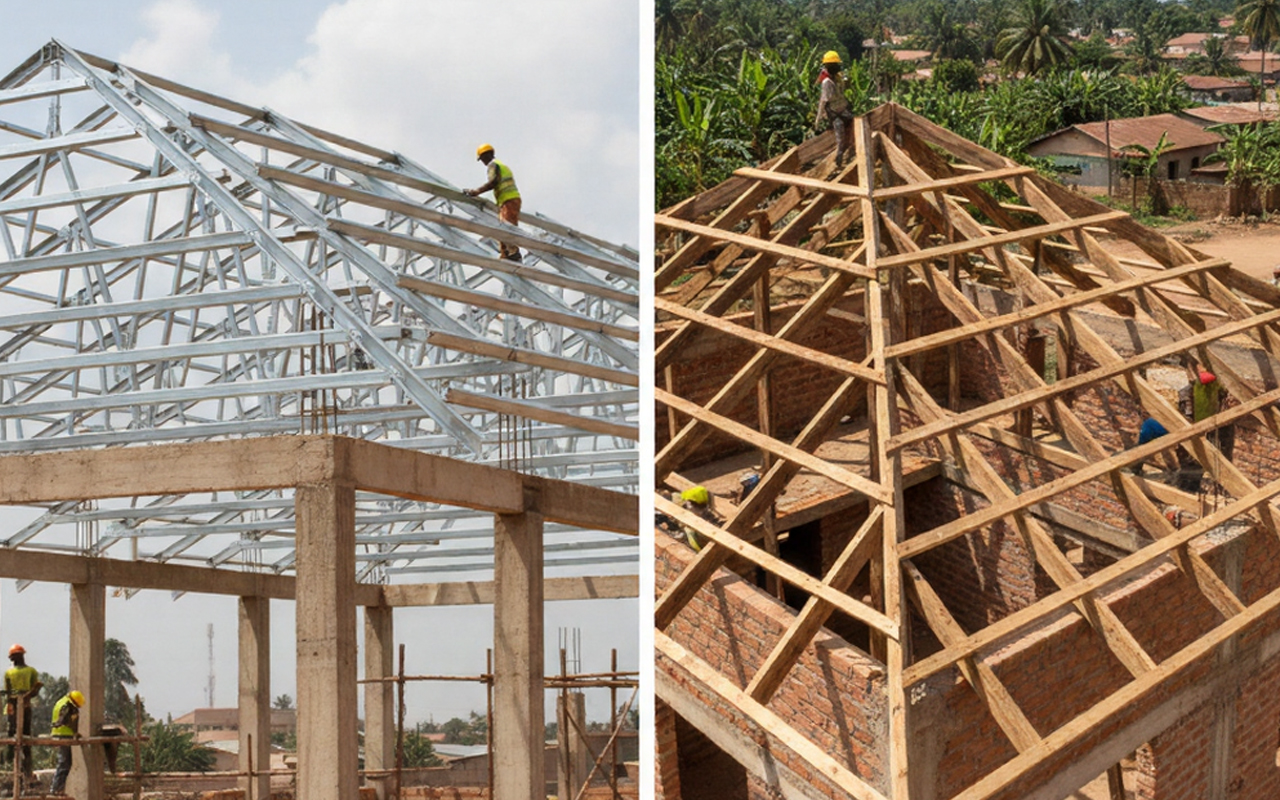
The strength of your roof depends heavily on the truss system. In Ghana, the two main options are steel trusses and wooden trusses.
This guide compares both to help you choose the best option.
What Are Roof Trusses?
Roof trusses support the roofing sheets and distribute weight evenly across the building.
Poor truss selection can lead to:
-
Roof sagging
-
Structural failure
-
Increased maintenance cost
Steel Trusses in Ghana
Advantages
-
Extremely strong and durable
-
Resistant to termites
-
Ideal for large spans
-
Minimal maintenance
Disadvantages
-
Higher initial cost
-
Requires skilled fabrication
Best Applications
-
Commercial buildings
-
Warehouses
-
Long-span roofs
Wooden Trusses in Ghana
Advantages
-
Lower upfront cost
-
Easy to modify
-
Traditional construction method
Disadvantages
-
Requires proper treatment
-
Vulnerable to termites and moisture
-
Shorter lifespan if poorly maintained
Best Applications
-
Residential homes
-
Smaller buildings
Steel vs Wooden Trusses: Key Differences
-
Durability: Steel trusses last longer
-
Cost: Wooden trusses are cheaper initially
-
Maintenance: Steel requires less maintenance
-
Strength: Steel handles larger spans
Which Truss Is Right for You?
Your choice depends on:
-
Budget
-
Building size
-
Long-term plans
At Bosfred Roofing, we design and install both steel and wooden trusses based on engineering standards.
Importance of Professional Truss Construction
Incorrect truss installation can compromise the entire building. Professional truss construction ensures:
-
Safety
-
Structural integrity
-
Compliance with building standards
Final Conclusion
Both steel and wooden trusses have their place in Ghana’s construction industry. The key is choosing the right system for your project and working with experienced professionals.
Bosfred Roofing delivers reliable truss construction backed by expertise and quality materials.